
Subscribe
Logo
Logo
  • Topics Icon Topics
    • AI Icon AI
    • Banking Icon Banking
    • Blockchain/DeFi Icon Blockchain/DeFi
    • Embedded Finance Icon Embedded Finance
    • Fraud/Identity Icon Fraud/Identity
    • Investing Icon Investing
    • Lending Icon Lending
    • Payments Icon Payments
    • Regulation Icon Regulation
    • Startups Icon Startups
  • Podcasts Icon Podcasts
  • Products Icon Products
    • Webinars Icon Webinars
    • White Papers Icon White Papers
  • TechWire Icon TechWire
  • Search
  • Subscribe
Reading
Pix for export? Fiserv takes Brazil’s mobile payments to Argentina
ShareTweet
Home
Fintech
Pix for export? Fiserv takes Brazil’s mobile payments to Argentina

Pix for export? Fiserv takes Brazil’s mobile payments to Argentina

David Feliba·
Fintech
·Jul. 19, 2023·3 min read

Payments giant Fiserv might have just contributed to exporting Brazil’s huge mobile payment boom overseas.

The U.S. firm enabled its merchants in neighboring Argentina to start taking payments in Pix, Brazil’s groundbreaking instant payments system, which has become ubiquitous in the country.

Brazilian tourism to Argentina is booming, making a case for LatAm-wide companies such as Fiserv to build products that meet this growing demand. The fintech has created an interface allowing Brazilian tourists to pay with the instant payment system as if they were back home in Rio de Janeiro or Sao Paulo.

This is an industry-first, Jorge Valdivia, general manager of Brazil at Fiserv, told Fintech Nexus in an exclusive interview. It could also pave the way for replicating the process in other countries in Latin America, he added.

140 million use Pix in Brazil
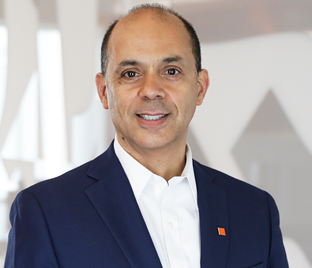
Jorge Valdivia, general manager at Fiserv in Brazil
Jorge Valdivia, general manager at Fiserv in Brazil.

Launched by the Brazilian central bank in late 2020, Pix has met no growth limits yet. It has expanded exponentially ever since, used by 140 million individuals in Brazil or almost two-thirds of its entire population. It processes north of $200 billion in transactions every month and is growing.

With those numbers in sight, extending Pix’s reach across Latin America provides a remarkable opportunity. “Pix is the preferred payment method for more than 86% of Brazilians,” Valdivia told Fintech Nexus. “Its popularity has created interest among Brazilians who would also like to use this method outside the country.”

Facilitating these cross-border payments can be profitable. Total card spending by Brazilians in Latin America and the US amounted to $5 billion in 2022, a report by the local credit card company association found. “As people travel and transact more post-pandemic, the market for these transactions will grow,” Valdivia said.

Pix’s convenience makes it an attractive alternative to Brazilians abroad. It is usually cheaper than credit and debit cards and processed instantaneously. “It is also very secure,” the executive said, making it a compelling alternative to “carrying out lots of cash.”

Fiserv reports 400,000 merchants in Argentina

With a severely undervalued currency, Argentina has become a top destination for neighboring countries. Thousands of Brazilians flock to Buenos Aires every week. With inflation over 120% and a depreciated peso, moving around stacks of cash has become problematic.

“For these reasons, it made sense to expand the availability of Pix into Argentina,” Valdivia said. The U.S. payment giant reports 400,000 merchants in Argentina using its services. Fiserv’s technology allows retailers in Argentina to issue a QR code that Brazilians can use to pay utilizing Pix. “The amount is converted into reais at the purchase, for which the buyer knows exactly how much they are spending in local currency and avoids exchange rate variations.”

The company is considering replicating the product elsewhere in Latin America, although it did not provide further detail on the next steps. “From a technological perspective, it would certainly be possible to expand these capabilities to other markets,” Valdivia said.

Brazil considered making Pix international

In less than two years, by the number of transactions, Pix became Brazil’s most used means of payment. According to a recent report by the central bank, it accounted for almost 30% of all electronic payments in 2022. That is higher than 20% for credit cards and 19% for debit cards.

In December, the president of the Central Bank of Brazil announced its protocols would be made available to other regulators to replicate. “We will open everything that we did with Pix to all central banks that want to copy it, for free,” Governor Roberto Campos Neto said at an event in Sao Paulo, according to local media.

As of yet, however, no public-led initiatives have been reported.

In two years, Pix became the most used means of payment in Brazil
  • David Feliba
    David Feliba

    David is a Latin American journalist. He reports regularly on the region for global news organizations such as The Washington Post, The New York Times, The Financial Times, and Americas Quarterly.

    He has worked for S&P Global Market Intelligence as a LatAm financial reporter and has built expertise on fintech and market trends in the region.

    He lives in Buenos Aires.

    View all posts

Tags
paymentsPix
Related

From CoDi to DiMo: Mexico’s second shot at growing digital payments

Jane Larimer_President & CEO_Nacha

Jane Larimer, President & CEO of Nacha, on operating the largest payments network

Fintech with benefits: solving healthcare payments

Breaking Down a Broken Healthcare Payments System

Popular Posts

Today:

  • FNThe Bank Charter Gold Rush: What’s Really Happening and What it Means for Banking Feb. 12, 2026
  • Copy of Fintech Nexus – Newsletter Creative (1)Unpacking PayPal’s Missed Moment: 7 Takeaways Feb. 5, 2026
  • FN articleVisa’s Director of Product Management on BNPL’s Future Jul. 22, 2025
  • Check-and-gusto-logoPayroll Is a Nightmare. Can Embedded Finance Fix It? Mar. 27, 2025
  • VancouverWeb Summit Dispatch: Debate Rages Over AI Applications’ Human Impact  May. 28, 2025
  • Jon StonaTips from Airwallex x McLaren on Making the Best of a Fintech Sponsorship  Jun. 18, 2025
  • Fintech ForecastWhy Every Lender Should Be Using Cash Flow Underwriting Today Jul. 29, 2025
  • SolaFunded: Sola lands $17M Series A to transform BPO with AI-native automation Aug. 22, 2025
  • 5 Founders Driving Humanoid AIThe Humanoid Era: 5 Leaders Defining Physical AI Sep. 10, 2025
  • Battle of the BotsFintech’s Battle of the Bots Sep. 25, 2025

This month:

  • Copy of Fintech Nexus – Newsletter Creative (1)Unpacking PayPal’s Missed Moment: 7 Takeaways Feb. 5, 2026
  • FNThe Bank Charter Gold Rush: What’s Really Happening and What it Means for Banking Feb. 12, 2026
  • 2026 FintechWhat does 2026 hold for Fintech?  Jan. 29, 2026
  • TISC Salmon Problem HD“The Salmon Problem” – Building AI For High Stakes Decision Making Jan. 22, 2026
  • Copy of Fintech Nexus – Newsletter CreativeWhy PDF Table Extraction Fails in Production—and What Banks Need to Do About It Feb. 5, 2026
  • The Unintended Consequences of the BaaS CrackdownThe Unintended Consequences of the BaaS Crackdown Apr. 10, 2025
  • Lin Qiao HDOPINION: Renting Intelligence is a Losing Game; Successful Enterprises Will Own It Jan. 22, 2026
  • Fintech 3.0Fintech 3.0 Runs on Stablecoins: Norwest VP Jordan Leites Shares Fintech’s Next Infrastructure Gains Jan. 15, 2026
  • Diya JollyXero’s Jolly on building a tech roadmap to level playing field for small businesses Jan. 14, 2026
  • FNThe Credit Building Boom: Innovation or Score Manipulation? Jan. 8, 2026

More News
  • About
  • Contact
  • Disclaimer
  • Privacy Policy
  • Terms
Subscribe
Copyright © 2026 Fintech Nexus
  • Topics
    • AI
    • Banking
    • Blockchain/DeFi
    • Embedded Finance
    • Fraud/Identity
    • Investing
    • Lending
    • Payments
    • Regulation
    • Startups
  • Podcasts
  • Products
    • Webinars
    • White Papers
  • TechWire
  • Contact Us
Start typing to see results or hit ESC to close
lis digital banking USA Lending Club UK
See all results