

[Editor’s note: This is the fourth article (see part one, part two and part three) in a special series we are publishing from Wharton Fintech ahead of LendIt Fintech USA. They are covering topics that will be addressed at the big annual event next week. This piece is by Kathleen Cordrey, Wharton MBA Class of ’22.]
It is becoming increasingly clear that COVID will be a catalyst for change across a number of industries. Within fintech, this could not be more true — especially within lending. Lenders play a crucial role in the American economy. Between mortgages, auto loans, small business loans, and personal loans, there are hundreds of billions of dollars in credit extended each year.
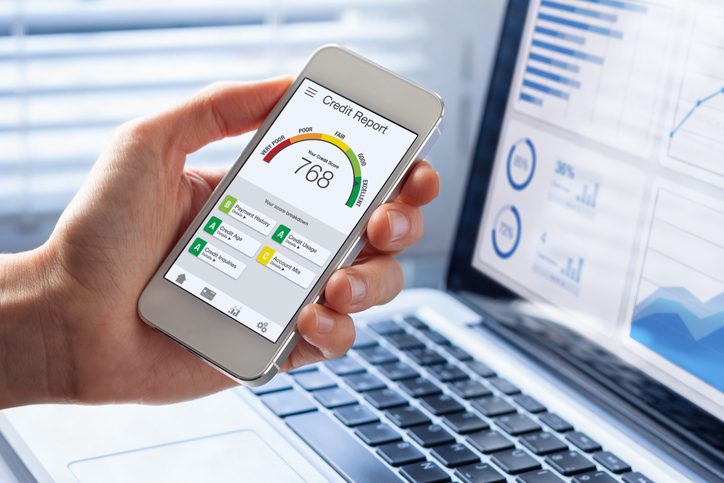
To evaluate borrowers, lenders have always reviewed historical data — such as repayment history — to ascertain the risk that a particular borrower presents. Lenders will look at a borrower’s credit score as a primary gauge of trustworthiness. A credit score is a single number that, in theory, is the distillation of all the historical data related to a borrower’s past credit and repayment patterns.
Historical data is, of course, helpful for informing a lender if a borrower can be trusted to repay debt in a timely manner. However, historical data does not always paint the full picture; it leaves room for information gaps that can hurt either the lender, the borrower, or both. The urgent need for credit that arose during the pandemic exposed some of the data insufficiencies that exist in today’s underwriting processes. These insufficiencies largely arise due to inadequate consideration given to real-time and forward-looking data. For a long time, accessing and harnessing this data in a way that would be helpful was not possible. However, today there exists a handful of companies that are working on doing just this – laying the foundation for an exciting transformation in lending in coming years.
Consider two examples that can serve as potential use cases to better grasp the opportunity:
Small Businesses and PPP Loans. Small businesses were among those worst hit by the pandemic and many needed loans to stay open. Yet, given a lockdown environment, it is worth asking whether credit scores are the best measure for evaluating short-term credit risk. Yes, historical data is certainly one factor that is important to take into account – but a credit score would not indicate the liquidity position, cash flow trends, payroll commitments, or operability of a business through the pandemic. Many companies were not able to operate at all during this time, so the future risk profile may not be best surmised from historical data.
Mortgages and Unemployment. Mortgage lenders were faced with an increase in mortgage applications during 2020, given the attractive low-rate environment. As mortgage applications were increasing, unfortunately so was unemployment. Mortgage lenders may not have access to the most accurate up-to-date employment status of their applicants. Needless to say, extending credit to someone who may not have a job is not only a risk to the lender, but also harmful to the borrower as well. To confirm employment status, lenders may seek additional validation through laborious and inefficient processes (e.g., manual requests for real-time employment status updates, pay stubs, etc.).
In the above scenarios, the ability to have access to real-time and predictive data would significantly improve the underwriting process.
Beyond COVID, there is an incredible opportunity to use real-time and forward-looking data to augment the lending & borrowing experience today. As another example, consider payroll-attached lending. In addition to up-to-date employment status verifications, lenders could access real-time employment and payroll information enabling increasingly precise underwriting. Direct connection to a payroll provider would also enable lenders to deduct repayments straight from a borrower’s paycheck. This kind of insight allows lenders to minimize their risk and reduce costs to borrowers, making it a win-win.
It seems like it may be time to (at least) supplement traditional evaluation measures, like the credit score, with the vast amount of data that exists today. There is a new wave of financial technology companies that are advancing this transformation. Of course, there will be a lot of challenges facing companies that disrupt these legacy systems. From regulatory hurdles to privacy concerns to data collection methods, there are myriad considerations within our extremely complex financial infrastructure that will require attention. But that provides all the more reason to be excited about the financial technology companies that are propelling this transformation forward – and hear leaders from Argyle, Ocrolus, Spring Labs and Capital One speak to some of these topics on Day 1 of the Lendit Fintech conference.