
Subscribe
Logo
Logo
  • Topics Icon Topics
    • AI Icon AI
    • Banking Icon Banking
    • Blockchain/DeFi Icon Blockchain/DeFi
    • Embedded Finance Icon Embedded Finance
    • Fraud/Identity Icon Fraud/Identity
    • Investing Icon Investing
    • Lending Icon Lending
    • Payments Icon Payments
    • Regulation Icon Regulation
    • Startups Icon Startups
  • Podcasts Icon Podcasts
  • Products Icon Products
    • Webinars Icon Webinars
    • White Papers Icon White Papers
  • TechWire Icon TechWire
  • Search
  • Subscribe
Reading
Could blockchain-based payments spark a regenerative revolution?
ShareTweet
Home
Crypto
Could blockchain-based payments spark a regenerative revolution?

Could blockchain-based payments spark a regenerative revolution?

Isabelle Castro Margaroli·
Crypto
·Nov. 8, 2022·3 min read

The race is on to reduce carbon emissions. 

The target year for a global net zero is silently looming, and many declare we are running out of time. Despite current efforts to reduce emissions, the amount produced worldwide continues to rise. Reports of a slower rise in 2022 than the year before are celebrated but still amount to almost 300 million tonnes. 

The reduced rates are attributed to an increased deployment of renewable energy. The COP27 summit has peaked hopes that more development in the sector will soon be underway. 

Recent reports from the summit tell of new renewable energy plans and fulfillment of pledges. 

Some are skeptical. During the 2022 EthBarcelona conference earlier this year, Jahed Momand, Co-Founder of Cerulean Ventures, stated, “Everyone in charge has failed to act. Last year was COP 26. This year we have COP27. We are currently on target for 3.3-degree warming in this century. That’s a not habitable planet in 150 years.”

Could it be a question of too little too late? 

RELATED: DeFi presents new opportunities in scaling voluntary carbon markets

Mobilizing carbon credits to incentivize regenerative farming

While world leaders gather to discuss possible ways forward, private players have jumped into action. 

Doing what they can to target the agricultural industry, the European carbon farming scaleup initiative, Agreena, has partnered with ZTLment to connect carbon credits with fiat currency, facilitating easy payments to farmers. 

Like Momand, they feel that voluntary carbon markets are a viable way for individuals to make a difference in the climate crisis. 
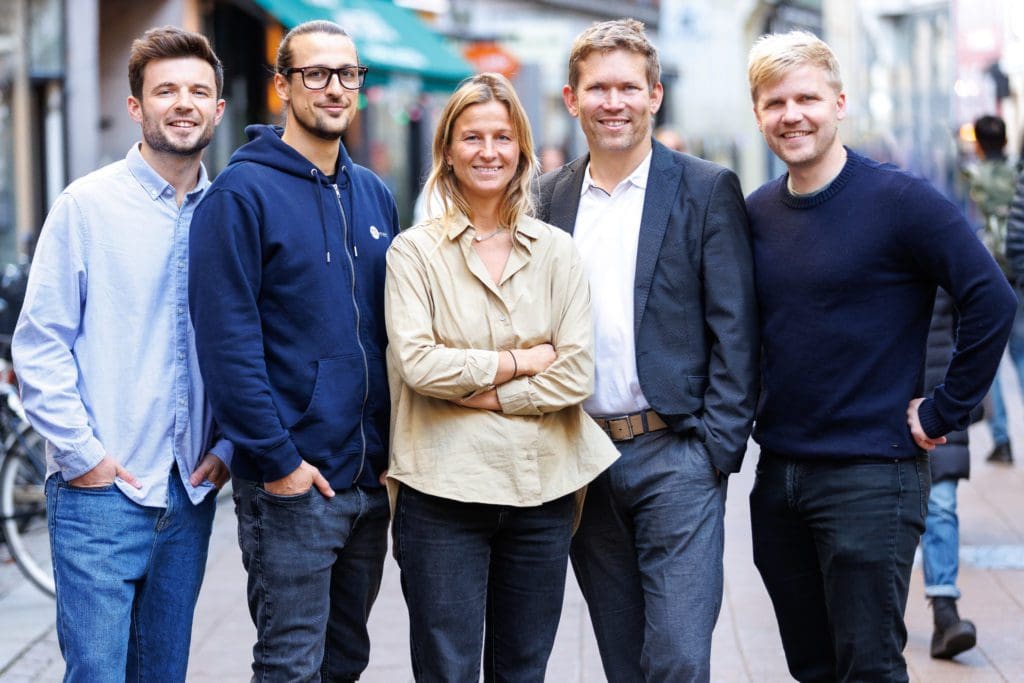
agreena and ztlment team
Agreena has partnered with ZTLment to incentivize regenerative farming

The solution tokenizes soil carbon certificates. Currently, soil carbon accounts for 30% of global greenhouse emissions. Farmers can preserve and increase the amount of carbon stored in the soil by applying regenerative farming practices to conserve soil carbon. 

Incentives for regenerative practices are sparse. Although some governments are positioning themselves to support such practices, funding is few and far between, with many government-funded initiatives oversubscribed. 

The tokenization of soil carbon certificates could financially incentivize farmers to implement these regenerative practices.

“We see our new ability to use blockchain for issuing payments as a key to unlock the market for farmers to transition from conventional agriculture to carbon farming,” said Simon Haldrup, CEO of Agreena. “With agriculture responsible for approximately one-third of the global carbon footprint, the switch to regenerative farming practices creates one of the greatest opportunities for climate action in the world – we are here to enable that.”
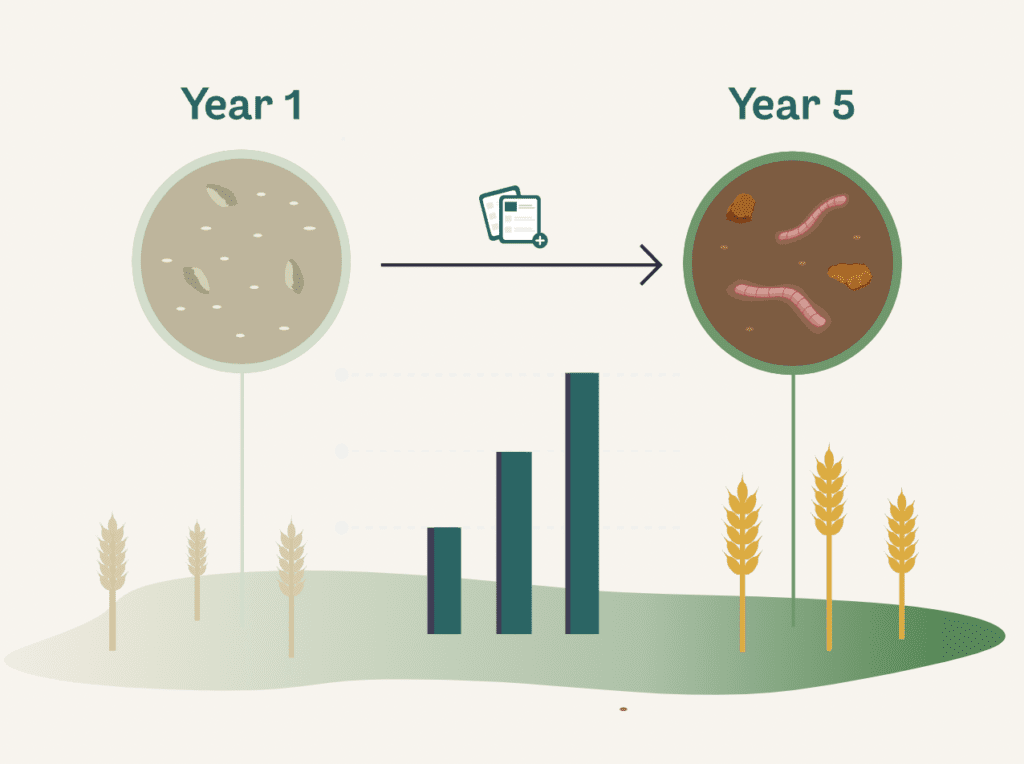
regenerative soil farming
Carbon certificates are tokenized to facilitate fiat payments to farmers

Implementing blockchain technology 

Partnering with automated payment solutions provider ZTLment, Agreena has brought blockchain interoperability to monetize carbon certificates. Simplifying the process, tokenized certificates can automatically generate payments to farmers in fiat currency.

“We set out to do away with the complexity of blockchain and open banking regulation,” says Mads Stolberg Larsen, co-founder and CEO of ZTLment. “With Agreena, we have built one of the first examples where real-life assets on a blockchain can be traded for real-life money.” 

ZTLment is one of the first regulated European payment providers built on blockchain. Based on open-banking regulations, they use their e-money provider, Monerium, to facilitate on and off-chain ramps.

“Farmers don’t need to know a thing about tokens or on-chain payments to see the reward we are bringing,” says Haldrup, “Nonetheless, this is a hallmark moment, not only for carbon farming but also for the blockchain community and people driving real-world use cases of Web3.”

  • Isabelle Castro Margaroli
    Isabelle Castro Margaroli

    Isabelle is a journalist for Fintech Nexus News and leads the Fintech Coffee Break podcast.

    Isabelle's interest in fintech comes from a yearning to understand society's rapid digitalization and its potential, a topic she has often addressed during her academic pursuits and journalistic career.

    View all posts

Tags
Blockchaincarboncarbon creditscop27HomepageWeb3
Related

Offline Digital Payments to Deal With Financial Exclusion of the Non-Digital World

The future of payments is choice: Gnosis Pay CEO Marcos Nunes

Beware of the crypto/blockchain patent troll

bank connections

Swift experiments with blockchain but may need a governance shift

Popular Posts

Today:

  • FNWhen AI Runs the Deal: What’s in the VC Automation Stack? Oct. 8, 2025
  • Are We About to Make a Quantum Leap in Small Business Lending(1)Are We About to Make a Quantum Leap in Small Business Lending? Sep. 30, 2025
  • fundedAmigo AI raises $11M to train clinical AI agents like doctors Mar. 13, 2026
  • Alloy President Laura SpiekermanAlloy President Laura Spiekerman on Agentic AI and Identity Risk Apr. 2, 2026
  • What is Really Going on With Private CreditWhat is Really Going on With Private Credit Apr. 30, 2026
  • Private Fintech Has Quietly Become Bigger Than Public Fintech. Now What?Private Fintech Has Quietly Become Bigger Than Public Fintech. Now What? May. 28, 2026
  • Fonoa (2)Funded: Fonoa raises $110M to build the operating system for autonomous tax May. 29, 2026

This month:

  • FNInside Parafin’s Push to Close Small Business Finance’s $2 Trillion Gap Jun. 4, 2026
  • FNMerge CEO on building the pipes behind AI, and starting with zero code May. 21, 2026
  • Private Fintech Has Quietly Become Bigger Than Public Fintech. Now What?Private Fintech Has Quietly Become Bigger Than Public Fintech. Now What? May. 28, 2026
  • Stephanie Sher, Founder, Integral VenturesIntegral Ventures’ Stephanie Sher is all about seeing diamonds in the rough May. 14, 2026
  • Chris Taylor Fractional AIFractional AI’s CEO Chris Taylor on Scaling the Unscalable Jul. 23, 2025
  • FNThe Bank Charter Gold Rush: What’s Really Happening and What it Means for Banking Feb. 12, 2026
  • MomentFunded: Moment raises $36M Series B to automate fixed income for financial institutions Jul. 18, 2025
  • What is Really Going on With Private CreditWhat is Really Going on With Private Credit Apr. 30, 2026
  • Santiago SuarezInside Addi’s mission to build a fairer financial system in Colombia Feb. 19, 2026
  • NumosFunded: Numos raises $4.25M to make AI accountable to finance teams Apr. 3, 2026

More News
  • About
  • Contact
  • Disclaimer
  • Privacy Policy
  • Terms
Subscribe
Copyright © 2026 Fintech Nexus
  • Topics
    • AI
    • Banking
    • Blockchain/DeFi
    • Embedded Finance
    • Fraud/Identity
    • Investing
    • Lending
    • Payments
    • Regulation
    • Startups
  • Podcasts
  • Products
    • Webinars
    • White Papers
  • TechWire
  • Contact Us
Start typing to see results or hit ESC to close
lis digital banking USA Lending Club UK
See all results