Liquidity Risk Is Back on the Table —What Could That Mean for Fintech?
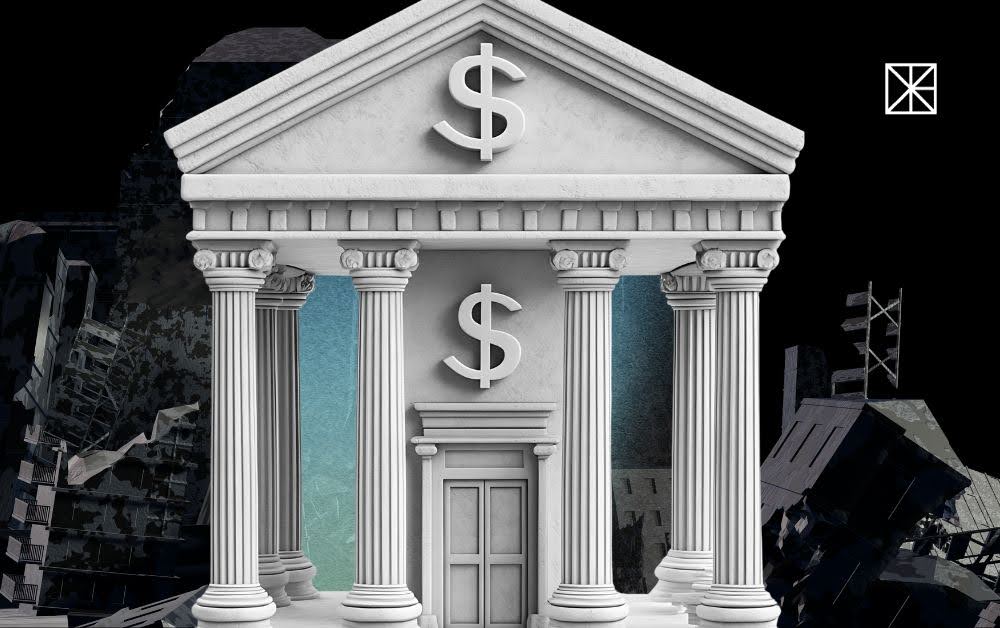
Conditions are ripe for capital to shift into “risk off” mode. But, post-2020, many fintechs already have their wartime footing
MIT Economist Rudi Dornbusch had an oft-quoted observation about economics, which also rings true for financial upheaval: “Things take longer to happen than you thought that they would, and then they happen faster than you thought they could.’
As we count down to the end of year, with markets skittish about the AI boom’s continued success, and economic concerns beginning to surface, a small bell, which started going off in a relatively mundane corner of the financial machinery earlier this year — excess bank reserves — is now sounding like a siren.
By now, the mid-November hush-hush meeting between Wall Street dealers and New York Federal Reserve president John Williams is old news. First covered by the Financial Times, the meeting’s point was to “continue engagement on the purpose of the standing repo facility as a tool of monetary policy implementation and to solicit feedback that ensures it remains effective for rate control,” according to a New York Fed spokesperson.
Short-term borrowing costs have teeter-tottered, complicating borrowers’ ability to secure repo rates near the interest rates they receive from reserve balances at the Fed — which stands to tighten liquidity with a challenging path toward a resolution. Even as the Fed has pumped billions through overnight repo activity, including a $29.4B injection earlier this month via its standing repo facility, which helps increase the amount of lendable cash in circulation, many primary dealers are still loath to use the Fed’s repo lending facility for fear of being perceived as risky institutions.
This shift is taking place as the Trump administration looks to reduce the maturity profile of national debt by borrowing ultra-short-term debts, while also pressuring the Federal Reserve to decrease rates. (These also stand to bring down rates for longer-term yields.) Money markets are pricing in a 70% chance of additional cuts in December, as Williams, Fed Governor Christopher Waller, and San Francisco Fed President Mary Daly, have signaled that rate cuts may be on the horizon for next month. These signals, read positively by public markets, mean major trading desks (e.g. at UBS Securities) think US stock selloffs may be done for the year, despite fears around an AI bubble.
“Global money markets will all need to find their way in a world without excessive reserves,” said Michiel Tukker, a senior rates strategist at ING, in an interview with Bloomberg. “Although central banks now have many ways [to] pump in liquidity if needed, the question is whether such liquidity will reach those in need.”
Though the bull-market music’s still playing, fintechs and neobanks may do well to consider ways to manage liquidity and interest-rate volatility risk. And technology may stand at the center of these strategies.
With liquidity crunches risking potential increases to the cost of capital — ceteris paribus, as Fed interest rates are obviously a key variable here — fintechs and neobanks will most likely have to find ways to reduce operating costs in order to maintain the same operational bandwidth without needlessly forsaking unit economics.
Some lending-focused fintechs may have already adjusted for the prospect of a downturn. In an interview with Fintech Nexus at Money20/20, Luke Voiles, CEO of embedded financial solutions provider Pipe, suggested the company’s pipelines are relatively recession-resilient. (Pipe laid off approximately half of its workforce this month, claiming it “needs to put a stronger focus on profitability, operating efficiency, and our core product set.”) Pipe’s customer base includes businesses like plumbers and nail salons, which continue to do well during recessions; and the short-term nature of the company’s loans means it can see and adjust to economic changes quickly.
“We have real-time data every single day,” he said, using restaurants as an example. “We know exactly how much every single restaurant has borrowed from us, or has not borrowed yet. On 200,000 restaurants, we have a perfect view of daily spend in restaurants, so we can actually get way ahead of everybody else in the curve.”
Not every fintech outfit has the benefit of extending short-term loans, or of straddling the markets Pipe does. (A purported benefit, we might say.) Companies lacking that kind of malleability or positioning may see a need to adopt real-time liquidity analytics and treasury automation, literally encoding best practices as companies grow increasingly reliant on Fed backstops.
But not all fintechs and neobanks will be affected equally. Crypto-adjacent fintech products may be hardest hit, as investors — institutional and retail — look to pull out of more volatile asset classes and into firmer stores of value. Bitcoin, the most prominent cryptocurrency, has fallen in value by nearly a third this month, driven by market skittishness, especially an exodus of capital from Bitcoin ETFs and other public-market crypto-adjacent investment vehicles. What’s more, stablecoin “rewards” often rely on treasury yields to pass on material incentives to holders, which may lower consumers’ interest in these digital denominations as a novel — but not FDIC backstopped — deposit product.
The confluence of these dynamics may make for a market reset: leading to tech-driven and efficiency-focused layoffs, a return to lower-risk practices, and a partial retreat from blockchain-fueled ebullience. When the music might stop, or shift into a minor key, remains to be seen.