EarnIn’s Tuck Hauptfuhrer on Building for the Moments Before Payday
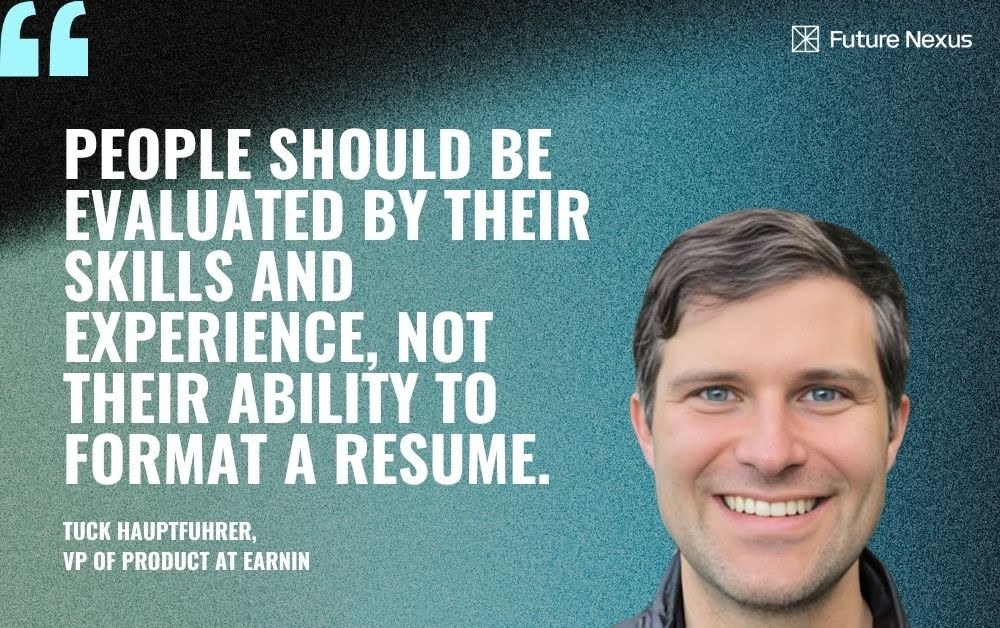
Tuck Hauptfuhrer is VP of Product at EarnIn and former CEO and co-founder of EarnBetter, the job platform acquired by EarnIn. He helped bring EarnBetter’s technology and approach to Earn Better by EarnIn, which helps people navigate job searches, career transitions, and new employment opportunities.
What is the moment you first realized “this is broken and I have to fix it”?
Before we wrote a line of code at EarnBetter, we found people on Craigslist and manually helped them with resumes, interview preparation, and job searches. One experience that stuck with me was a person who had been rejected for a warehouse role. In a few minutes, we helped them reformat their resume to better highlight their skills and experience. They reapplied to the exact same job, landed an interview, and got hired that week.
Nothing about their qualifications had changed, only how the qualifications were presented. That’s when I realized something was fundamentally broken. People should be evaluated by their skills and experience, not their ability to format a resume. I became convinced that job search support shouldn’t be reserved for people who can afford career coaches or paywalled tools. It needed to be more readily available to more people.
Was there a specific story about a customer, friend, or yourself that crystallized the idea?
The seeds were planted during my time at Credit Karma. For so many people trying to make financial progress, the biggest barrier wasn’t access to credit tools, it was their ability to improve their earnings and find their next paycheck. That connection between career momentum and financial momentum is tightly intertwined. And yes, there are tools that could help people navigate it, like resume coaching, interview prep, personalized job matching. But these are often locked behind paywalls or simply don’t exist for the workers who need them the most.
In our early days of manually helping people on Craigslist, I repeatedly heard from people that they felt alone during the job search process. Many felt overwhelmed by how complicated and time-consuming it had become. They were experts in their work but not in the system. That’s what drove me and some colleagues from Credit Karma to found EarnBetter. We wanted to provide free support, at scale, for working Americans.
What’s a time feedback from a customer hit you personally, either in a good or bad way, and what did it teach you about where the industry is headed?
One story that has stuck with me came from a woman who found us about a week after losing a job she’d held for seven years. She told us getting back into the job market was scary because she had a resume she hadn’t touched in years and felt unprepared. With our help, she landed a role faster and said it changed her life. What struck me wasn’t just that EarnBetter helped her get a job. It was that she’d gone from feeling alone and behind to feeling confident and in control. I think we’ll continue hearing more stories like this, as startups find ways to design business models around benefit to consumer.
How do you measure product success, especially for something where the value can at times be anecdotal?
When someone loses their direct deposit or their job, the clock starts ticking on their financial stability. One of the things we can measure as a product metric that’s mission-aligned is speed until the next paycheck. It’s less about the volume of applications we can support and more about getting people back to earning as fast as possible.
How should the financial industry think about building for workers? What are the biggest changes you’re seeing?
The biggest shift I see is that income has become a much more important component when we think about financial health. Historically, financial services tended to be more focused on what happens after someone gets paid. That is, how they spend, save, borrow, or invest. But income itself is often the biggest driver of financial outcomes.
For companies like EarnIn, that creates an interesting challenge and opportunity. If you’re focused exclusively on one moment in a person’s financial journey, you’re likely missing important context around how they earn, how stable that income is, and how it changes over time.
I think the most impactful products will be the ones that recognize that financial health doesn’t start when money hits an account but with a person’s ability to earn and maintain income in the first place.
More broadly, I think we’re moving toward a world where the lines between work, income, and financial services become increasingly blurred. Companies that understand those connections will be in a stronger position to build products that address the root causes of financial challenges rather than just the symptoms.