In this episode, we connect with serial founder Ohad Samet, CEO of TrueAccord. Ohad has been working in fintech machine learning for a decade and a half, applying multi-dimensional mathematics to consumer finance. The result? A more empathetic approach to the traditionally gnarly problem of debt collection.
A new report from Trustwave SpiderLabs provides a rich description of the myriad of threats facing financial services companies. 2023 Financial Services Sector Threat Landscape covers prominent threat actors and tactics, breaks down the financial services attack flow into steps, and covers several common hacker entry points.
GenAI has a lot of potential in financial services, but accuracy may be holding it back. Human interaction could help.
OpenAI, backed with $1B+ by Elon Musk & MSFT, can now program SQL and write Harry Potter fan-fiction
This week, we look at a breakthrough artificial intelligence release from OpenAI, called GPT-3. It is powered by a machine learning algorithm called a Transformer Model, and has been trained on 8 years of web-crawled text data across 175 billion parameters. GPT-3 likes to do arithmetic, solve SAT analogy questions, write Harry Potter fan fiction, and code CSS and SQL queries. We anchor the analysis of these development in the changing $8 trillion landscape of our public companies, and the tech cold war with China.
Lenders gravitate towards using artificial intelligence (AI), so they must be dedicated to removing biases from their models. Luckily there are tools to help them maximize returns and minimize risks.
What we know intuitively, and what the software shows, is that the pixelated image can be expanded into a cone of multiple probable outcomes. The same pixelated face can yield millions of various, uncanny permutations. These mathematical permutations of our human flesh exit in an area which is called “latent space”. The way to pick one out of the many is called “gradient descent”.
Imagine you are standing in an open field, and see many beautiful hills nearby. Or alternately, imagine you are standing on a hill, looking across the rolling valleys. You decide to pick one of these valleys, based on how popular or how close it is. This is gradient descent, and the valley is the generated face. Which way would you go?

artificial intelligencebig techdigital transformationenterprise blockchainidentity and privacyIndiaregulation & compliancetelecom & infrastructure
·This week, we look at:
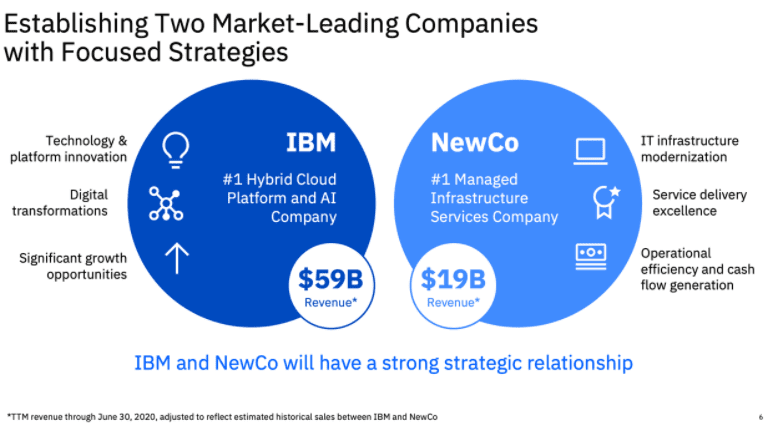
IBM spinning out its managed services division with $18 billion of revenue in order to focus on hybrid cloud and digital transformation
Reliance Jio, the Indian mobile telecom provider with 400 million users, contemplating financial services with backing from Google and Facebook
The role that technology infrastructure plays in the delivery of financial services
A poorly implemented chatbot will do more harm than good. Avoiding these five pitfalls increases the likelihood of success.
FedNow may have sparked some real time urgency but institutions may still be stuck in the "receive only" phase. Cloud could help.
This week, we look at:
What it means to ask questions and find answers
From asking simple questions that result in neobanks and roboadvisors. Who will win — Schwab or Robinhood?
To asking macro questions about the finance / high-tech competition. Who will win — Goldman Sachs or Google?
To asking profound questions about the nature of the work, and the art of finding your own questions.
We can't formulate the questions for you. But we can give you a framework of needs for both the individual, and the organization.
The questions that you ask are the answers that you will get.