

This week, we’re looking at a familiar tension in enterprise AI—speed versus trust, and a startup betting that finance teams won’t accept one without the other.
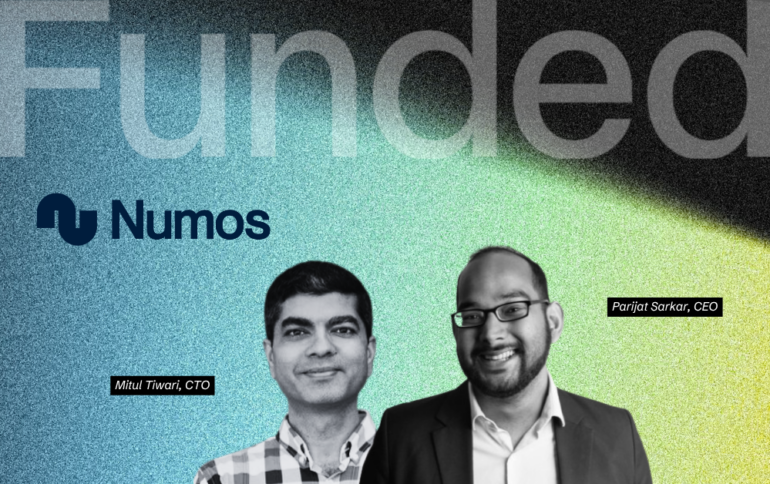
Numos, a San Francisco-based fintech, raised a $4.25 million seed round led by General Catalyst with participation from Operator Collective to bring AI deeper into the finance stack.
The company sits on top of existing systems, pulling data across accounting, billing, warehouses, and spreadsheets to automate workflows like reconciliations, variance analysis, and reporting. The pitch is not just automation, but visibility. Every output comes with sources, reasoning, and an audit trail, designed for teams that are ultimately accountable for the numbers.
That framing is landing. Customers like Udemy are already using Numos, reporting 80% faster FP&A cycles and cutting close times by more than half.
“In enterprise finance, trust is earned by proving value in real workflows, not demos,” said CEO Parijat Sarkar. “Starting with focused use cases inside public companies and showing results in their actual environments creates the foundation to expand responsibly. This funding accelerates that model, bringing more agents into production and scaling across finance teams while continuing to build that trust.”
The founding team leans technical and domain-heavy. Sarkar previously led product, growth, and engineering at Zenefits, while CTO Mitul Tiwari spent a decade building large-scale AI systems at LinkedIn and ServiceNow.
“For decades, finance software has been built as systems of record with rigid workflows,” Tiwari said. “What’s emerging now is a new layer, AI systems that operate across the finance stack and execute work end-to-end. Over the next few years, this will fundamentally reshape enterprise software, with finance among the first domains to undergo that shift.”
The timing makes sense. Finance teams have been slower to adopt AI, not because of lack of interest, but because black-box systems don’t hold up under audit. Numos is betting that the winning approach is not better models alone, but systems that can show their work.
If that holds, the next wave of finance tooling may look less like dashboards and more like accountable operators.
–
This article was drafted with the help of generative AI using company-submitted details, then manually edited and carefully reviewed by a human editor before publication.
