

The fintech playbook from a firm that backed Apple, FedEx and Canva before anyone was paying attention.
With nearly a half-century in operation, and the experience only successful founders can bring, Matrix has a history of backing winners. The seven-person VC firm, which has raised $800 million through 12 rounds, bet early on Apple, FedEx and Canva. Matrix focuses on early-stage, preseed to Series A companies.
Partner Matt Brown said they’re also picky. While some VCs set quotas or ensure they sign up a company from the latest trend every quarter, Matrix focuses on quality, with each partner bringing in two or three companies each year. That gives them the time to support those companies throughout their life cycles.
Brown said timing and patience in tandem are keys to success. In the 1990s, it was infrastructure and improving bandwidth. Yes, there was a crash, but then came Netflix, YouTube and social media sites. Cloud and SaaS were born out of the mobile surge.
“There are no bad ideas, just bad timing,” Brown said.
Take that infrastructure foundation. Combine it with the digital boom. Add in large financial institutions revisiting the feasibility of large, legacy operating systems, and you have the seeds of the fintech surge beginning in the 2010s. Brown said fintech was slower than expected until then, but has been fertile ground ever since and should continue to be so for the next decade-plus.
Once the opportunity is identified, what does Brown look for in founders to capitalize on it?
Traits of successful founders
1. They learn from experience
Founders are shaped by their times. Those growing up in the aftermath of 2008 saw businesses go under and homes lost.
Seeking to avoid the credit trap as they emerged from college, they embraced BNPL companies like Afterpay, income-smoothing concepts like Flex and Earnin, an earned wage access facilitator. All are Matrix-backed companies with unique realizations, novel underwriting and distinct product-shaping features.
2. They serve as field historians
It matters less whether successful founders are right out of school or more seasoned, and more that they’re historians of their sector. They know the key developments and players, and have good timing.
“The best founders are the students of the history of their market and that product area,” Brown said. “They have this orientation on why this is the right time to start this business.”
3. Their personality fits their product.
Brown also considers the founders’ personalities. If they’re targeting business, can they successfully pitch to the C-suite? For consumer-focused firms, do they have the right design? Great ideas often wither under the wrong founder.
4. An ability to leverage existing relationships
Distribution has long been a moat, even more so since AI lowered the cost of generating code. If the customer has an existing relationship with you and trusts your brand, you have a key advantage. The more value-added products and services you can deliver, the more potential you have. The more information you have on your customers, the more you can customize additional options.
Back in the day, the deposit line at the local bank may have had a restaurateur, a construction worker and a dental office manager. Despite their unique needs, they were serviced by the same system.
Not anymore. With fintech’s advent, entrepreneurs began to cater to unique verticals and embed products into those experiences. Brown cited Matrix-supported company Rainforest, which was purpose-built for vertical SaaS platforms, so companies can grow processing volume, optimize margins and maximize payments revenue. That customization capability recognizes the unique payment features of those different verticals.
It’s part of a movement that could see software-intermediated payments soon capture half of US payment volumes.
Bringing value within verticals
That laser focus within verticals wasn’t always there. Another Matrix company, Meadow, streamlines the entire student financial experience for universities.
“If you nail that, there’s a large business to be built there,” Brown said. “These sub-venture-scale opportunities become large venture opportunities if you can start bundling financial products in them.”
That’s a different response than past investors may have given. They might have encouraged founders to target schools at all levels, both domestically and internationally.
The tech is different today. And so is the climate. 10 or 15 years ago, universities were more profitable. With today’s financial squeeze, they have to think of themselves as a business and their students as customers, then do everything possible to help them succeed.
Proptech offers consistent opportunity
Matrix works with a list of proptech firms across several verticals. Brown said proptech has received consistent attention throughout the fintech era, a reflection of the size and variety of the opportunity and the stress founders can alleviate through creativity. With renting and mortgages being stressful experiences, bringing transparency can be very pro-consumer.
Matrix was an early Apartment List backer. Apartment List began as a rental marketplace, but evolved into leasing, engagement and retention. It’s perfectly situated as more people become renters amid escalating house prices.
Flex lets renters split their rent into two payments and other bills into smaller amounts.
Consumer services remain ripe
Opportunities will always arise as consumer behavior shifts. Brown said consumers can be hard to predict. New graduates generate side hustles. International students and workers send more remittances back home. There’s always room for user-friendly financial services, no matter the niche.
Simplify the ability to hold US dollars via stablecoins? Huge. Solve regulatory issues? KYC? Money transfer issues? It’s a vast market.
“To build a great consumer experience and a lot of products and test a lot of things, I think that’s obviously only gotten easier, which historically has been a big tailwind for a lot of consumer products,” Brown said.
Looking ahead to a changing landscape
Brown said the gold standard used to be high margins, which companies didn’t always have to work that hard to achieve. Now that AI has made writing code cheaper, companies don’t need those high margins to solve harder issues.
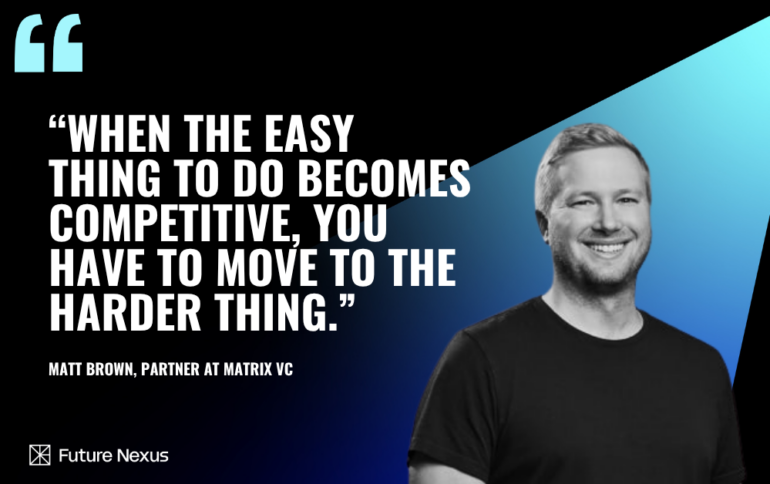
“When the easy thing to do becomes competitive, you have to move to the harder thing,” Brown said. “That doesn’t necessarily mean it’s a lower opportunity, but the bar is raised for what you have to do to build a big business and what consumers are expecting.
The next neobank won’t be Chime in 2015; it will be an order of magnitude more complex.”
